
It got harder to turn every week. Then one morning it stopped turning.
An ignition almost never fails overnight. It wears down, quietly, for months, and the day it finally quits is the first day anybody pays attention to it.

The wiggle is a warning
If you have to jiggle the key, or push it in and lift the wheel before the car will start, something inside is already worn. Usually it is the wafers in the cylinder, rounded off by years of turning. Sometimes it is the key, worn smooth enough that the cuts no longer reach. Either way it gets worse from here, and neither one repairs itself.
Stop forcing it
Forcing a tired ignition is how people snap a key off inside the cylinder. A small repair becomes a bigger one in about a second. If a piece is already broken off in there, leave it alone and call. Pliers and screwdrivers push the fragment deeper, and I would rather pull it out of a cylinder I can still save.
Repairing a cylinder against replacing one
I do both, at your vehicle, and which one you need comes down to how far the wear has gone. A cylinder that is dirty or slightly worn can often be serviced and put back to work. One that has lost its wafers gets replaced. You hear which it is before I start, not after.
When the worn part is the key
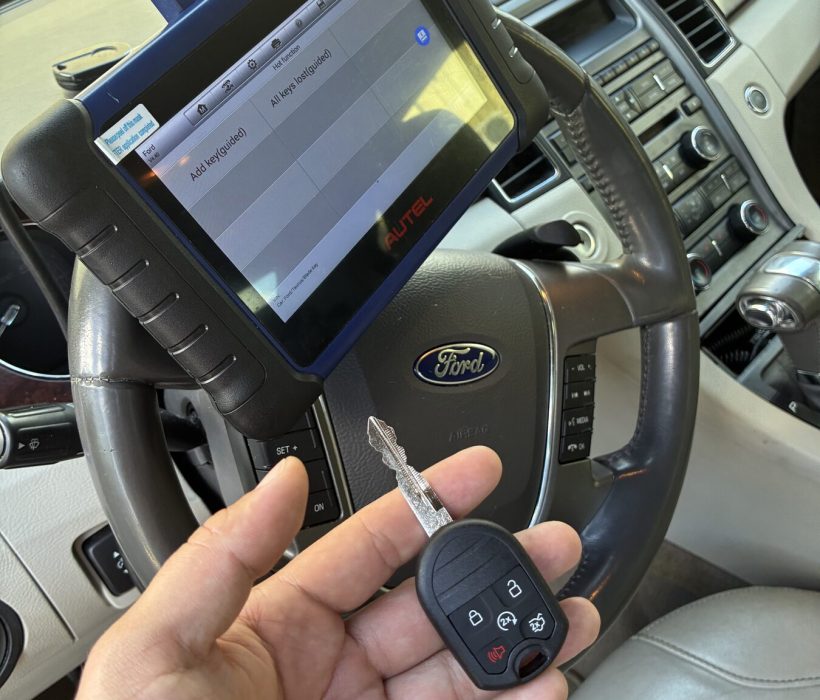
Sometimes the cylinder is fine and the key has simply given up, which happens to any key that has spent a decade in a pocket with loose change. I can cut and program a fresh one on the same visit. That matters more than it sounds, because putting a worn key back into a new cylinder starts the wear clock over again on day one.
Vehicles I take
Domestic and Asian makes. European ignitions are a no from me, so BMW, Mercedes, Audi, Volkswagen, Volvo and Land Rover go to somebody else. Telling you that on the phone costs you nothing. Finding it out in your driveway costs you an afternoon.